

MAESTRO OF THE OBVIOUS
I am a Maestro of the Obvious. I’m a simpleton who states truths that are hard to see because they are so easy to see.
To begin, I’ll name which institutions in our culture do bad and self-serving things, causing suffering and mayhem:
ALL OF THEM!
EVERYTHING IS DANGEROUS!
The institutions that do bad and self-serving things are corporations, religions, governments, the media, the military, big science, medicine, the pharmaceuticals, AI companies, academia, publishing, the film and art and music industries, the big tech companies, professional sports, and every other system I neglected to name. All of them. No exceptions.
They all do corrupt and shortsighted things that are profoundly influenced by the crass motivations of profiteering and egotism.
+
The Other Side
Here’s another set of truths that’s hard to see because it’s so easy to see:
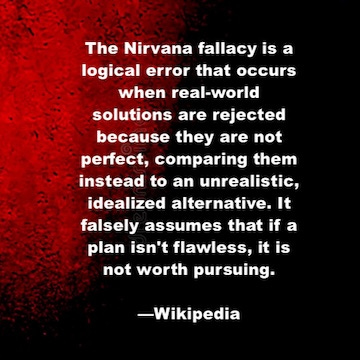
Our culture brainwashes us to think in absolutes. Many of us are inclined to believe that an institution is either completely trustworthy or utterly corrupt. A system either serves the people perfectly or exploits them horrendously.
Superficially, this binary framework feels clarifying. It sorts the world into good guys and bad guys, simplifying our moral landscape into a manageable package.
But the alleged clarity is false. It’s a sedative that prevents us from seeing what’s actually in front of us.
The uncomfortable and obvious truth that becomes invisible through its very obviousness is that many powerful institutions and groups are simultaneously doing harm and also providing value. They exploit and they serve. They oppress and they occasionally liberate.
+
Discernment Is Hard Work
So here’s what we Maestros of the Obvious do: Toward all the myopic, greedy, unscrupulous institutions, we develop discerning skepticism, based on accurate evidence. We criticize them. We do what we can to reform them. And we acknowledge that they may also do some good and helpful things that we are grateful for.
Our practice is discerning skepticism, based on accurate evidence. Not reflexive rejection. Not the conspiracy theorist’s blanket assumption that everything official is a lie, nor the true believer’s assumption that established institutions deserve our faith and trust.
Discernment is hard work.
When corporations lobby against environmental regulations or oppose DEI initiatives, we document which corporations do that and what the consequences have been.
When pharmaceutical companies suppress unfavorable research and overcharge for their products, we trace the specific studies and the specific harms that resulted.
When media outlets slant coverage to favor the rich and powerful, we identify the ownership structures and the editorial decisions driving it.
And we also acknowledge complexity. The same corporation that exploits workers and destroys ecosystems may fund research that saves lives.
The same religious institution that covers up abuse may also run soup kitchens and provide community.
The same drug companies that often serve gross profit over compassionate health may provide life-saving products—as they did to help heal my cancer.
We Maestros of the Obvious maintain intellectual and imaginal hygiene. We distinguish between documented fact and speculation, between justified skepticism and lazy dismissal. When new evidence emerges, we revise our understanding. Maybe we admit when we don’t know something rather than filling the gap with unresearched feelings and assumptions.
And we stay useful. Criticism without engagement is performance. The point isn’t to feel superior to flawed institutions but to make them less flawed. We can build alternatives, or at a minimum protect ourselves and others from their predations while still accessing whatever genuine value they provide.
The Intelligence of Foolishness
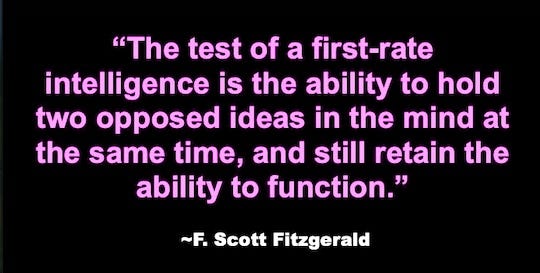
So we Maestros of the Obvious go forward, holding in our minds a poised understanding of their contradictions, as intelligent fools do.
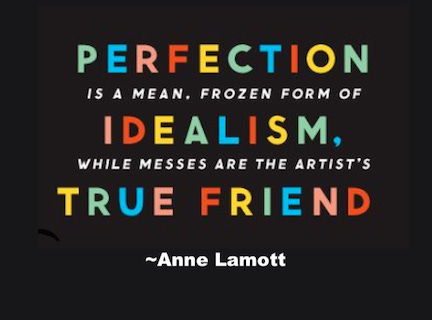
We cultivate an awareness that everything on earth is flawed and imperfect, and that many imperfect and flawed things, though not all, also have value and beneficence.
Intelligent fools like me aren’t people who know nothing. Rather, we refuse the false comfort of cartoonish certainty and absolutism. We hold multiple truths simultaneously so we can critique systems while using them.
This is really fucking hard. The human mind craves coherence. We want our allies to be purely good and our enemies to be purely evil. We want the institutions we depend on to be trustworthy, or we want permission to reject them entirely.
The middle path, the path of discriminating engagement, requires constant recalibration and willingness to be uncomfortable.
+
It’s Complicated
Case in point: The pharmaceutical industry has engaged in predatory pricing, fraudulent research, aggressive marketing of addictive substances, and systematic exploitation of developing nations. These are documented facts. Goddamn them.
And also: Their antibiotics, vaccines, insulin, and countless other medications have prevented immeasurable suffering and death. These are also documented facts. Praise them.
The intelligent fool doesn’t resolve this tension by choosing a side. The intelligent fool says: I will take the medications that help me be healthy while fighting for a system that doesn’t price-gouge the sick. I will be grateful for medical advances while demanding accountability for medical corruption.
This applies across every domain. Academia produces both liberating knowledge and credentialist gatekeeping. Technology creates both connection and surveillance. Religious communities offer both spiritual nourishment and dogmatic control.
The work is learning to navigate these contradictions without becoming paralyzed by them or collapsing them into false simplicity.
+
The Wisdom of Co-Emergence
We intelligent fools and Maestros of the Obvious meditate on the psychological concept of co-emergence, which postulates that every beautiful, useful thing is intertwined with some challenging problem. And many challenging problems have useful clues and insights to teach us.
Co-emergence isn’t the same as false equivalence. It’s not saying that good and evil balance out, or that we shouldn’t distinguish between better and worse. We simply recognize that reality is woven from threads that can’t be fully separated.
The internet gives voice to many and enables unprecedented collaboration; it also facilitates surveillance and new forms of manipulation. These aren’t separate facts. They emerge from the same technological capacities.
The scientific method gives us knowledge about the material world that enhances our lives in countless ways. It also gets deployed to justify eugenics, serve corporate manipulation, facilitate militarism, and dismiss functional medicine. The same commitment to empirical evidence that liberates us from superstition can be twisted to obscure moral questions behind claims of objectivity.
Understanding co-emergence doesn’t mean resignation. Our work isn’t to find a purely good institution or a completely uncorrupted system. The complicated task is to strengthen the beneficial aspects while constraining the harmful ones, knowing that this work is never finished and that new problems will emerge from our solutions.
Every challenging problem teaches us something about where our blind spots are. The corruption in institutions encourages us to be vigilant. The contradictions we encounter force us to develop more sophisticated thinking.
The Five-Year-Old’s Wisdom
When my daughter was five years old, she said, “There’s nothing in the world that is either all good or all bad.”
Many pundits and prophets lack her wisdom. If we heed it, we save ourselves from the exhausting cycle of idolizing and demonizing every new force that arises in the human story.
Fill in the following blank with any influence of your choosing: ______________ is neither our savior or destroyer. It’s another flawed tool. It will harm and heal, confuse and inspire.
Guess what? It’s not only institutions that act like this. Most people, including me and you, do both generous and selfish things. We illuminate and obscure. Our understanding is always partial, and our own actions sometimes have unintended consequences.
+
Living as a Maestro of the Obvious
To hold complexity with grace requires specific practices.
• Regular reality checks. Am I criticizing this institution based on documented evidence or tribal affiliation? Am I defending it because it actually serves people well, or because I’m uncomfortable with ambiguity? What would change my mind?
• Both/and thinking. We train ourselves to say “yes, and” instead of “yes, but.” Yes, this system has serious problems, and it also provides genuine value. Not “but,” which implies one fact negates the other, but “and,” which holds both truths as simultaneously real.
• Distinguish between critique and rejection. Criticizing an institution’s flaws isn’t the same as wanting it destroyed. Often the most scathing critics are those who believe in an institution’s potential and are frustrated by its failures.
• Notice what we’re grateful for. Even as we document harms, why not acknowledge benefits? We can be grateful for antibiotics while fighting pharmaceutical price-gouging. Gratitude and critique aren’t opposites. The discipline of gratitude actually sharpens our analysis by preventing bitterness from distorting it.
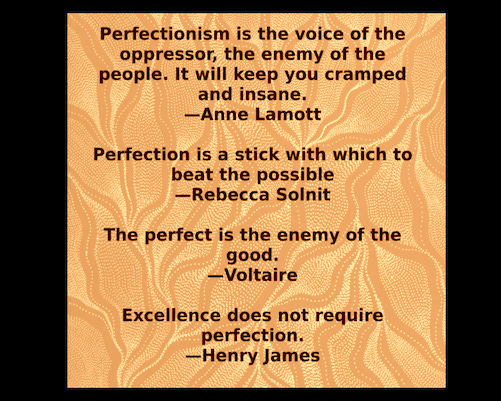
• Accept imperfection as the permanent condition. There will never be a moment when institutions are perfected and systems fully align with our values. The ongoing work is liberating. It means we can stop waiting for perfect conditions before we engage and stop letting perfect be the enemy of good.
The Radical Center
What I’m describing might sound like the bland both-sides-ism that treats every issue as equally balanced. It’s not.
This is the radical center that refuses the lazy comforts of ideological purity. It insists on thinking for ourselves rather than outsourcing our opinions to teams. It demands we hold ourselves and our allies to the same standards we apply to opponents.
The radical center acknowledges that corporations do tremendous harm but also create wealth and resources that may sometimes benefit us all. It admits that mainstream media spreads dangerous propaganda and also employs journalists doing crucial investigative work. It knows that big tech companies invade privacy and also create tools that expand human capability.
From this poised, uncomfortable, constantly recalibrating position, we become harder to manipulate because we’re not waiting for permission from authorities or reflexively rejecting everything they say. We become more effective because we’re working with reality as it actually is rather than as we wish it were.
• • • • • • • • • • • • • • • • • • • • • • • • • • • • • • • • • • • • • • • • • • • • • • • • •
ADDENDUM: A Sobering Caveat
Everything I’ve written above is true. But there is one glaring exception: a source of toxicity that does NOT warrant our generous efforts to hold open the possibility that it has some saving grace.
You know what I mean: the relentless perpetrators of awfulness that are purely horrible, heinous, and far past any hope for redemption.
I’m talking about the Trumpocalypse: the ongoing assault on everything good and beautiful and just and true by the gang of fascist, misogynist, oligarchic, bigoted thugs who now hold the power in the federal government.
The Trumpocalypse is perpetrating the destruction of the rights of women over their own bodies. It’s doing all it can to destroy the dignity of immigrants and refugees. It’s working hard in its effort to destroy the safety of trans people, queer people, Black and brown people, disabled people, poor people, and anyone deemed disposable.
There are many other things it seeks to decimate, too many to name all of them. They include: the independence of the courts; the integrity of elections; the protection of the environment; the credibility of science; and the ability to distinguish between fact and propaganda.
The Trumpocalypse is the elevation of cruelty as policy; the criminalization of compassion; the looting of the public commons; the persecution of dissent; the methodical cultivation of a personality cult around a very sick man whose stated ambition is to be a dictator.
This is pure atrocity, and it’s NOT doing even a little good. It’s purely a weapon aimed at the heart of everything we love.
So here is the sobering caveat to my essay on holding complexity: Complexity is a discipline for engaging with the flawed and the partial. It’s not a discipline for engaging with evil.
When fascists are dismantling the republic in real time, the radical center isn’t the position that says “well, they have a point too.” The radical center is the position that has done the actual work of discernment, and, having done it, names the danger that’s in front of us without flinching.
The Maestro of the Obvious states the obvious: This regime isn’t redeemable. It must be resisted, defeated, and ended.
We Maestros of the Obvious know that many things in life are both poison and medicine, but some poisons are just poison.
• • • • • • • • • • • • • • • • • • • • • • • • • • • • • • • • • • • • • • • • • • • • • • • • •
The Maestro’s Manifesto
Here’s what it means to be a Maestro of the Obvious:
We state simple truths that complexity-averse thinking obscures.
We acknowledge that every institution capable of doing good is also capable of doing harm, and usually does both.
We develop discerning skepticism based on evidence, not tribal loyalty.
We criticize what needs criticizing while remaining grateful for genuine benefits.
We hold contradictions without resolving them prematurely.
We meditate on co-emergence: the intertwining of benefit and harm, and the way solutions inevitably generate new problems.
We remember what the five-year-old knows.
We stay useful, engaged, discriminating, and honest.
We refuse the false clarity of binary thinking in favor of the difficult wisdom of complexity.
We are simpletons who see the obvious: that reality is complicated. The work of building a better world requires engaging with the flawed materials at hand rather than waiting for perfect tools that will never arrive.
• • • • • • • • • • • • • • • • • • • • • • • • • • • • • • • • • • • • • • • • • • • • • • • • •
Check out my LinkTree: https://linktr.ee/robbrezsny
• • • • • • • • • • • • • • • • • • • • • • • • • • • • • • • • • • • • • • • • • • • • • • • • •
FREE WILL ASTROLOGY
For the Week of May 7
TAURUS (April 20-May 20): When lightning from a cloud hits sand or soil, the current travels down into the ground. It melts material along its path and forms tubular, branching glass structures that can penetrate deep below the surface. I believe that metaphorically similar phenomena will soon happen in your life, Taurus. Sudden insights or electrifying feelings will leave permanent traces in your psyche, creating new pathways for energy and information to flow. These disruptive inspirations and inspiring disruptions will rewire your internal circuitry, creating channels that will enhance your receptivity to future revelations. You’ll be able to absorb clues and hints from life that you weren’t tuned into before.
GEMINI (May 21-June 20): I invite you to ruminate on death not as the conclusion of physical life, but as a metaphor for discarding what’s stale and outmoded. In that light, what would be the best deaths you could generate during the coming weeks? Use your imagination with verve and vigor as you dream up scenarios in which you purge parts of your life that are not serving your strongest, most vital yearnings. Visualize how much fresh potency that will liberate. (PS: To reiterate: You are NOT in physical danger.)
CANCER (June 21-July 22): What part of you is too tame? Maybe your imagination is politely well-behaved, or maybe your voice edits itself before it dares to say what it really thinks. Can you inspire it to be wilder and freer? Not reckless or destructive, but more honest and experimental? Here’s a suggestion: Go on regular excursions with your wild side, maybe once every two weeks. Follow it as it chooses what to explore and create. This might ultimately teach your tamed self that it’s safe to let primal wisdom help steer you.
LEO (July 23-Aug. 22): According to quantum physics, particles can become “entangled,” which means they share a single connected quantum state. Observing and measuring one particle reveals information about the other, even if they’re not in close proximity. Einstein called this “spooky action at a distance.” I predict that different parts of your life will also interweave in unlikely ways during the coming weeks, Leo. Moves you make in one area will seem to produce mysterious effects in other domains. For example, adjusting your morning routine may boost your creative output. Healing an old alliance could unlock a professional opportunity. Everything will be more intermingled than the visible evidence suggests.
VIRGO (Aug. 23-Sept. 22): Your key power word for now is stretch. Speak it aloud multiple times every day, and write it on a card that you put in a place where you will keep seeing it. Also, make a point of physically and spiritually living out these three senses of stretch: 1. to lengthen, widen, or expand without snapping or tearing; 2. to unfurl your body to its full reach, boosting circulation and warding off stiffness or cramps; 3. to take on challenging tasks that push you to amplify your abilities and move beyond what you previously believed you could do.
LIBRA (Sept. 23-Oct. 22): Four oracles for you, Libra: 1. You’re in possession of keys to doors that haven’t been built yet. Tuck those keys away somewhere safe. 2. You’re ready to dream up titles for stories your life hasn’t lived through yet. Write those titles down. 3. You are being granted sneak previews of your future, even though you can’t yet see the bridge that will carry you there. Imprint these glimpses on your memory. 4. You have everything required to grow a more muscular faith that’s grounded in real evidence, not in vague hopes and wishful thinking. Take advantage.
• • • • • • • • • • • • • • • • • • • • • • • • • • • • • • • • • • • • • • • • • • • • • • • • •
If you would like to support my work, please consider:
buying my Expanded Audio Horoscopes and Daily Horoscopes
and/or
becoming a paid subscriber to my Free Will Astrology Newsletter
and/or
donating at my Paypal site: paypal.com/paypalme/GiftsForRob
(contribute as Friends and Family)
• • • • • • • • • • • • • • • • • • • • • • • • • • • • • • • • • • • • • • • • • • • • • • • • •
SCORPIO (Oct. 23-Nov. 21): At the ancient Library of Alexandria, editors did far more than copy manuscripts. They compared multiple versions of important works and produced editions that aimed at definitively reliable texts. Their efforts at preservation required active intervention rather than mere reproduction. In the coming weeks, Scorpio, I think it will be fun and transformative for you to make similar adjustments to your own life story. How might your memories of the past need to be corrected and refined? How could you make your personal mythology more accurate and liberating? I invite you to revise and revivify the tales you tell yourself about your magnificent journey from the moment you were born until now.
SAGITTARIUS (Nov. 22-Dec. 21): The speed of light is how fast it travels through a vacuum. When moving through water and other media, though, light’s swiftness decreases. The fastest possible speed in the universe only applies in emptiness. If you put anything in light’s way, it slows down. Let’s use this as a metaphor for your life. I suspect you may be frustrated by how incrementally things are moving. But you’re not in a vacuum. Your bright intelligence is traveling through the complex situations that life has brought you. So of course you’re not zipping along with maximum haste. My advice: Be grateful for the slowdowns. Learn all you can about how they are educating and transforming your brilliance.
CAPRICORN (Dec. 22-Jan. 19): Cryptographer Claude Shannon (1916–2001) was the father of information theory. His achievements were comparable to those of Albert Einstein, Isaac Newton, and Charles Darwin. Here’s one of his secrets: He kept his office filled with juggling equipment, unicycles, and mechanical toys, which inspired him to solve abstract problems. His playful tinkering helped inspire breakthroughs that ultimately created the digital age. For him, recreation and innovation happened at the same time. I invite you to try a similar approach in the coming weeks, Capricorn. Blend “serious work” with “just messing around.” Be alert for key insights that emerge from improvisation and experimentation. Your diversions won’t be distractions from your purpose but rather pathways toward it.
AQUARIUS (Jan. 20-Feb. 18): Master calligrapher Yukimi Annand is an Aquarius. She teaches that beautiful letters emerge not just from the hand that holds the brush, but from the entire body and relaxed awareness. Breath, posture, centered weight, and quiet mind all flow through the arm to create each stroke. Trying to control the outcome with arduous effort produces rigid, lifeless art. This is an excellent teaching for you right now, Aquarius. Whatever you’re striving to accomplish, I beg you to refrain from forcing results through grueling, overly laborious exertion. Instead, align your whole being so that graceful outcomes flow naturally from your soulful coherence.
PISCES (Feb. 19-March 20): The placebo effect is getting stronger over time. Placebos in drug trials are becoming increasingly effective, to the point where it’s sometimes becoming harder to prove that actual drugs work better than sugar pills. Are we getting better at healing ourselves through belief? That would be a problem for pharmaceutical companies but interesting for the rest of us. Dear Pisces, I believe your placebo response is exceptionally strong right now. In the coming weeks, use it deliberately. Be daring and exuberant in your efforts to heal yourself.
ARIES (March 21-April 19): Astronomers depend on instruments to collect the observations that fuel their work, but they don’t spend every night glued to the stars. On overcast nights, they turn to what they have already gathered, digging into past measurements and reworking the data. You’re in a comparable phase, Aries. For now, looking farther out into the glittering world won’t give you anything essential. The guidance you need is folded into what you’ve previously seen, felt, and taken in. It’s waiting for you to sort through and understand it on a deeper level.
• • • • • • • • • • • • • • • • • • • • • • • • • • • • • • • • • • • • • • • • • • • • • • • • •
Hi! 33 years ago, me and some friends sent you an email informing you that we had canonized you. You never wrote back, which didn't surprise us because we assumed you got far too much fan mail to ever keep up with. I'm still not surprised, because what the hell do you say to 5 college students who declare you a saint?
I've recently gotten in touch with those friends because one of us died. When I read your essay week, I started to forward it to one of them, with the note "Rob Breszny is still kicking ass."
After college, I went on to become a Reverend Doctor. I've been taught by some of the most notable theologians alive, and by people reflecting back on life as they approach death. I talk with psychics and energy workers. I don't even believe in astrology. Through it all, you've continued to add wisdom and joy to my life.
One of the most important lessons you've taught me is to trust that my work is meaningful and valuable even when the external world isn't validating me. So in a sense, I don't think you need to hear this. On the other hand, I also know that validation feels pretty good when it does arrive. So, thanks! I'm entering a new chapter in my life, maybe a whole new volume, and I wanted you to hear from another person whose life is better because of what you do.
The current astrology backs up everything you're saying about institutional binary collapse. Pluto entered Aquarius in November 2024, and its multi-decade work is exactly the categorical revision you're naming. Pluto in Aquarius is restructuring how we hold groups, institutions, networks, and collectivities. The sign rules everything from "the people" to "the system" to "movements" to "AI" itself.
The binary trap (institution is either pure or rotten) is a Pluto-in-Capricorn-era reflex. Capricorn does authority-as-monolith. Aquarius disaggregates. It asks which PART of the institution is exploiting and which part is serving. It demands that distinction.
Discerning skepticism is the work the transit is making possible, and demanding. Maestros of the Obvious are doing Aquarius-Pluto homework that Capricorn-Pluto framing couldn't see.